Most AI screenwriting debates ask the wrong question first: can AI write a script?
The more useful question is smaller and more practical: where does AI change the writer's workflow?
Yuran Qian's C&C 2026 paper, Toward Better Support for Screenwriters: Understanding How AI Co-Creation Transforms the Creative Process of Screenwriting, is a short research-progress paper rather than a final empirical study. That distinction matters. The paper does not claim to have finished a large interview study. It defines the research scope, explains why screenwriting needs more targeted AI-support research, describes an early micro-short drama scriptwriting prototype, and lays out a plan for interviews with screenwriters who use AI.
For Story2Board, that is still useful. The paper points to a product gap we see every day: writers do not only need a model that produces text. They need help organizing ideas, testing plot structure, preserving character intent, and handing a script forward into visual planning.
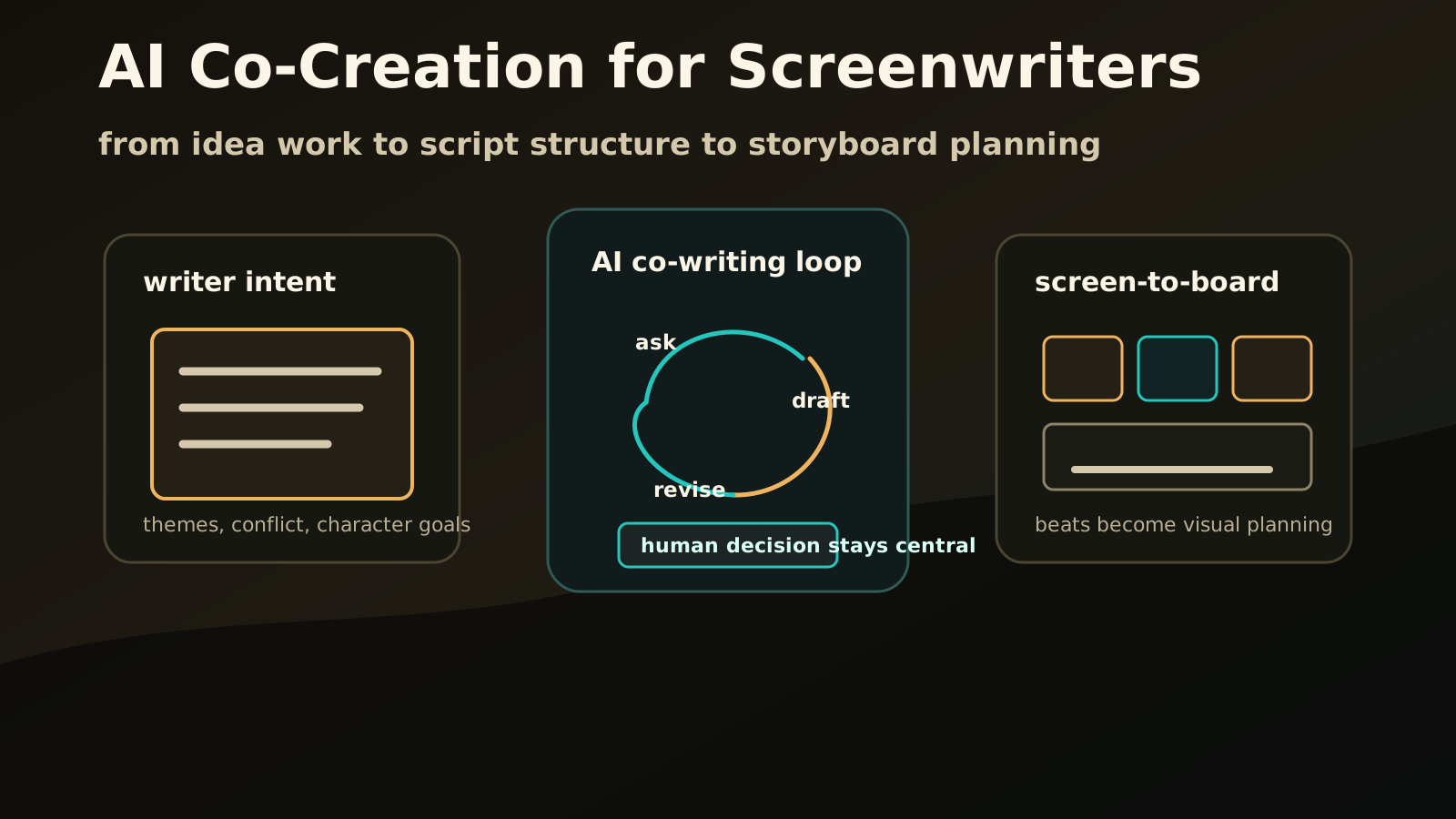
The paper in one sentence
The paper argues that AI changes screenwriting not only by generating text, but by reshaping decision-making, pre-writing, revision, and the relationship between textual ideas and future visual production.
That framing is more useful than a yes-or-no argument about AI authorship.
Screenwriting is not just prose. It is a production-facing writing practice. A screenplay has to carry story, character, pacing, location, visual imagination, and handoff logic for directors, cinematographers, editors, and producers. If AI enters that workflow, the key question is not only whether the output reads well. The key question is how the writer's process changes.
The study is deliberately scoped
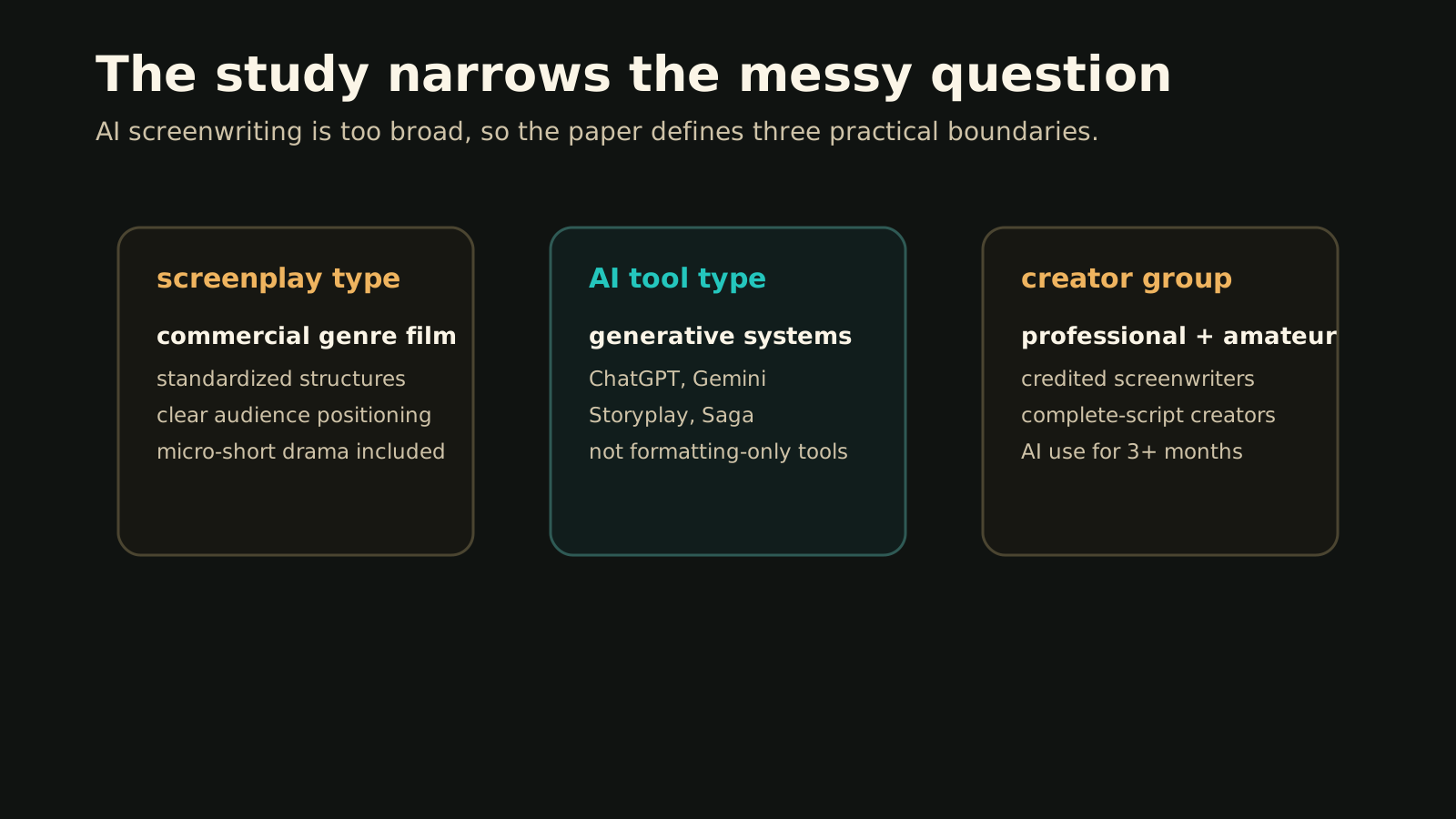
The paper narrows the research in three ways:
| Scope boundary | What the paper includes |
|---|---|
| Screenplay type | commercial genre films and Chinese vertical micro-short dramas |
| AI tool type | generative tools such as ChatGPT, Gemini, Storyplay, and Saga |
| Creator group | professional screenwriters and experienced amateur creators |
This is a good choice. Commercial genre films and micro-short dramas have clearer patterns than art films, documentaries, musicals, or highly personal theatre writing. That makes workflow change easier to compare.
The research questions also focus on workflow rather than output:
| Research question | Product translation |
|---|---|
| What decision mechanisms characterize human-AI collaboration in script creation? | where should the system ask, suggest, constrain, or stay quiet? |
| Which parts of traditional writing are added, simplified, or restructured? | which product steps are genuinely useful, and which only add friction? |
That second question is the one every AI creative tool should answer before adding features.
Pre-writing is the under-supported stage
The paper's literature review makes one point that matters for Story2Board: writing is not just final text generation.
Writers spend real effort before drafting:
| Pre-writing activity | Why it matters |
|---|---|
| worldbuilding | defines the rules and texture of the story world |
| plotline exploration | tests possible routes before committing |
| character construction | establishes motivation and behavior |
| concept screening | decides which ideas survive |
| visual imagination | prepares the story for future production |
The paper argues that this pre-writing stage has not received enough targeted support, especially for screenwriters. Existing AI writing tools often help generate paragraphs, scenes, or dialogue, but they do not always help writers organize, connect, screen, and revise ideas before formal drafting.
That is directly relevant to Story2Board. If a user arrives with only a premise, the product should not jump straight to finished panels. It should help convert the premise into a workable story state: theme, genre, conflict, character goals, locations, and visual beats.
The micro-short drama prototype is the most concrete part
The paper describes a prototype for AI-assisted micro-short drama scriptwriting. It is built around GPT-3.5 and a structured workflow with about 40 interactive prompts and three iterative refinement stages.
The prototype takes a single-sentence idea and guides it toward a structured screenplay through steps such as:
| Workflow step | What it clarifies |
|---|---|
| identifying the source of the concept | where the premise comes from |
| determining the genre | what audience expectations apply |
| standardizing the thematic expression | what the story is really about |
| defining the highlight module | what creates attention or emotional pull |
| setting the core conflict | what pressure drives the plot |
| identifying the main goal | what the protagonist wants |
| designing the story structure | how the arc is arranged |
| generating a synopsis | how the premise expands |
| developing character settings | who carries the conflict |
| building episode outlines | how scenes and beats unfold |
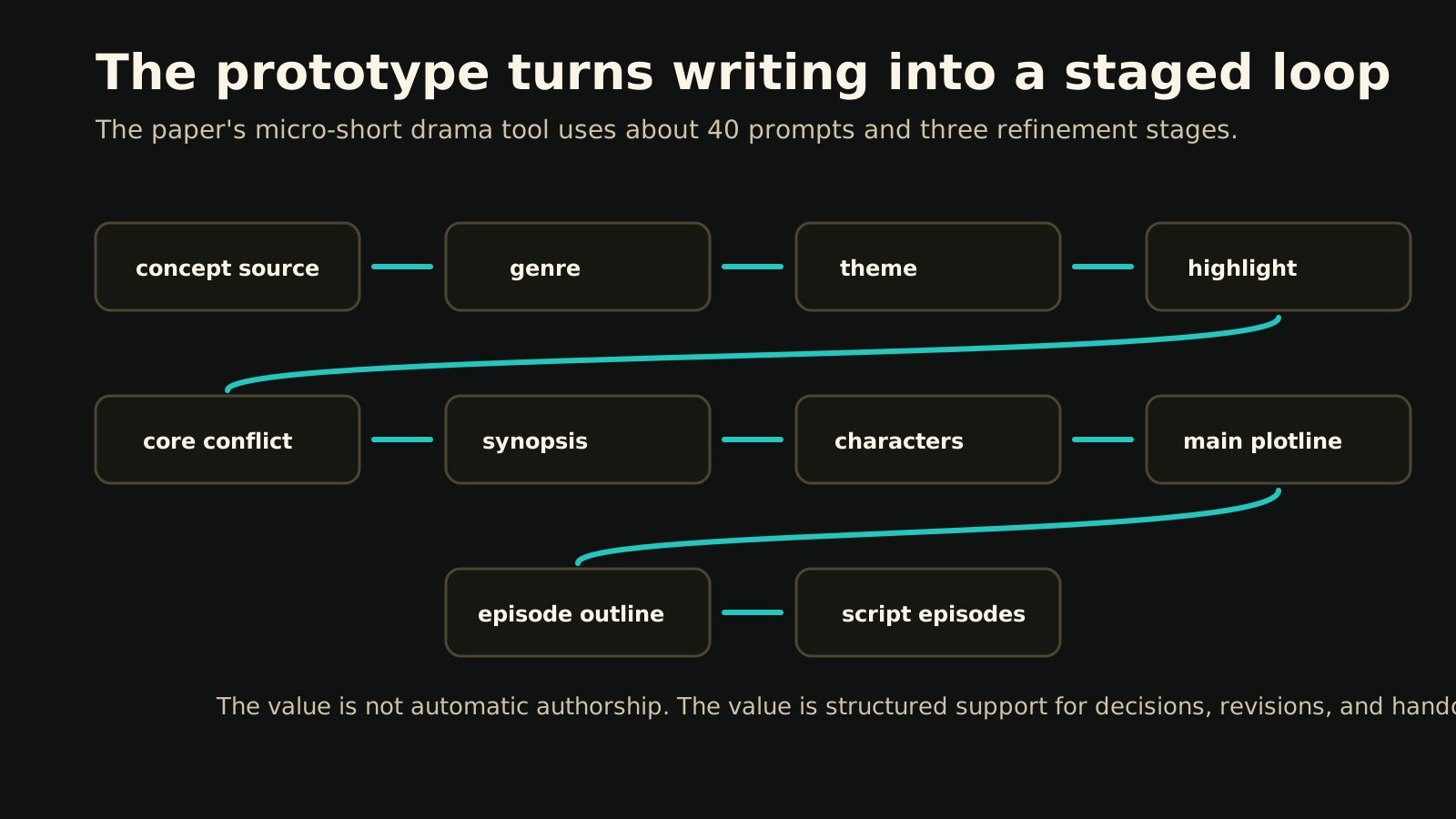
The prototype also defines reusable materials: 15 sources of concepts, 126 genres, and 27 audience-grabbing highlight types. Each element uses a schema with definitions, features, replaceable expressions, and examples.
The value here is not that GPT-3.5 magically writes better drama. The value is workflow design. The tool makes the writer move through decisions in a structured way. That is exactly the shape Story2Board needs when moving from script to shots.
Structure can help without flattening authorship
The paper is careful about a real tension. AI screenwriting systems often use templates because templates are operationally convenient. But if the template is too rigid, it can flatten a writer's voice.
That tension appears in any storyboard tool:
| Useful structure | Risk if overdone |
|---|---|
| genre conventions | generic story beats |
| shot templates | mechanical cinematography |
| character cards | fixed archetypes |
| plot checkpoints | formulaic pacing |
| revision prompts | over-guided writing |
The product lesson is to treat structure as scaffolding, not a cage.
Story2Board should use structured fields to keep continuity and make the workflow inspectable. It should not force every story into the same emotional rhythm. A detective short, a romance scene, and a vertical revenge drama may all benefit from structured planning, but they should not feel like the same template with different names.
The planned interview method is product-relevant
The paper's next phase is an interview study with AI-using screenwriters. The plan has three connected steps:
| Step | Purpose |
|---|---|
| Screening questionnaire | identify eligible professional and amateur participants |
| Interactive board activity | collect behavioral evidence about how writers approach creative tasks |
| Semi-structured interviews | explore motivations, attitudes, and lived experience |
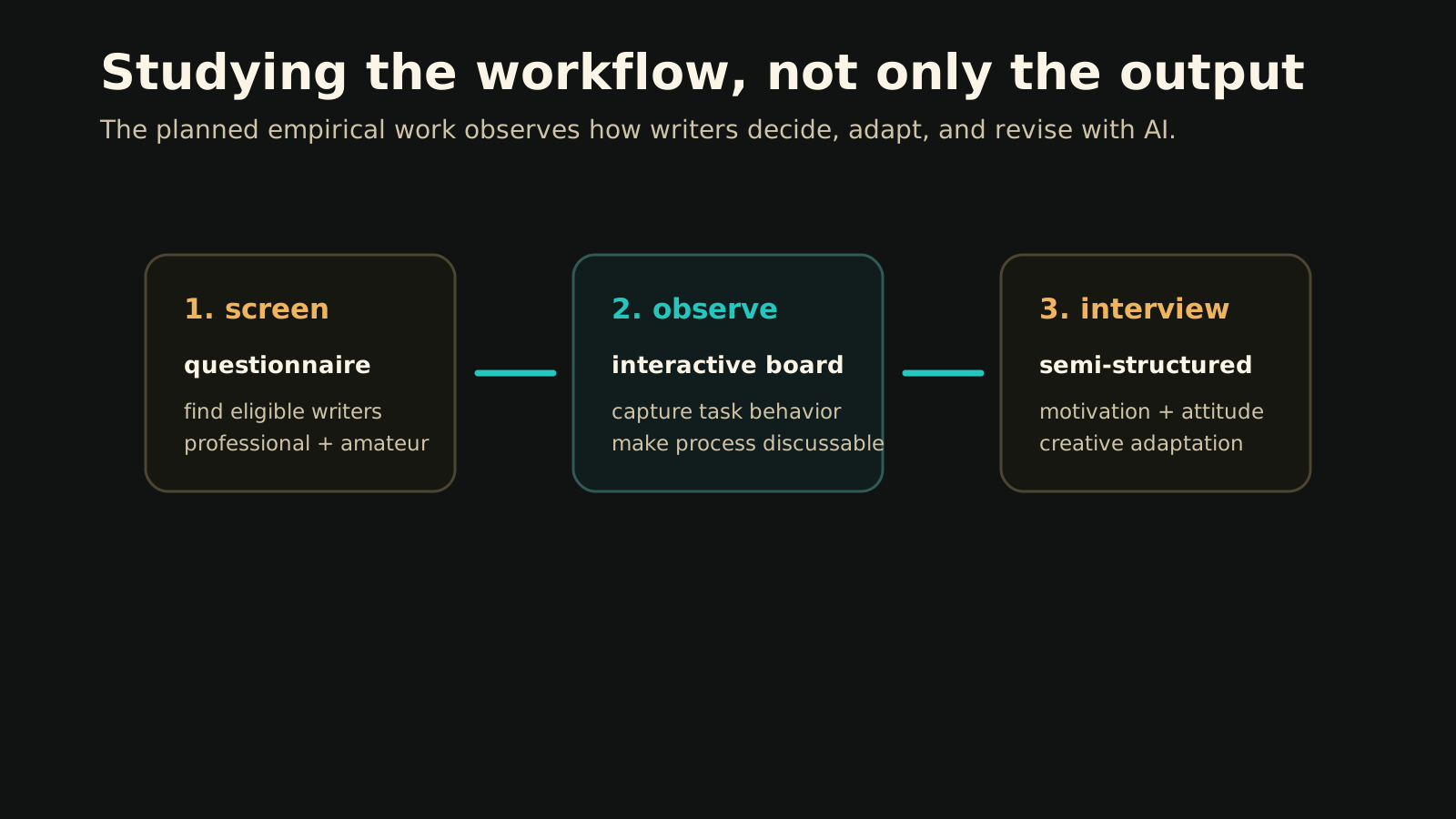
That interactive board activity is especially relevant. Screenwriting workflow is hard to understand from interview answers alone. People remember ideals, frustrations, and outcomes, but they may not accurately describe the micro-decisions that happen during a writing session.
For Story2Board, the same principle applies to product research. We should not only ask users whether they want AI help. We should watch where they hesitate:
| Moment of hesitation | Possible product support |
|---|---|
| choosing a genre direction | compare possible story promises |
| defining the conflict | surface stakes and opposition |
| moving from scene to shot | propose coverage options |
| revising a weak beat | show alternate causal paths |
| maintaining visual continuity | track locations, props, and character states |
The best AI feature often sits exactly where users pause.
What Story2Board should borrow
The paper supports a simple product thesis: script-to-storyboard tools need to support writing decisions before they support image generation.
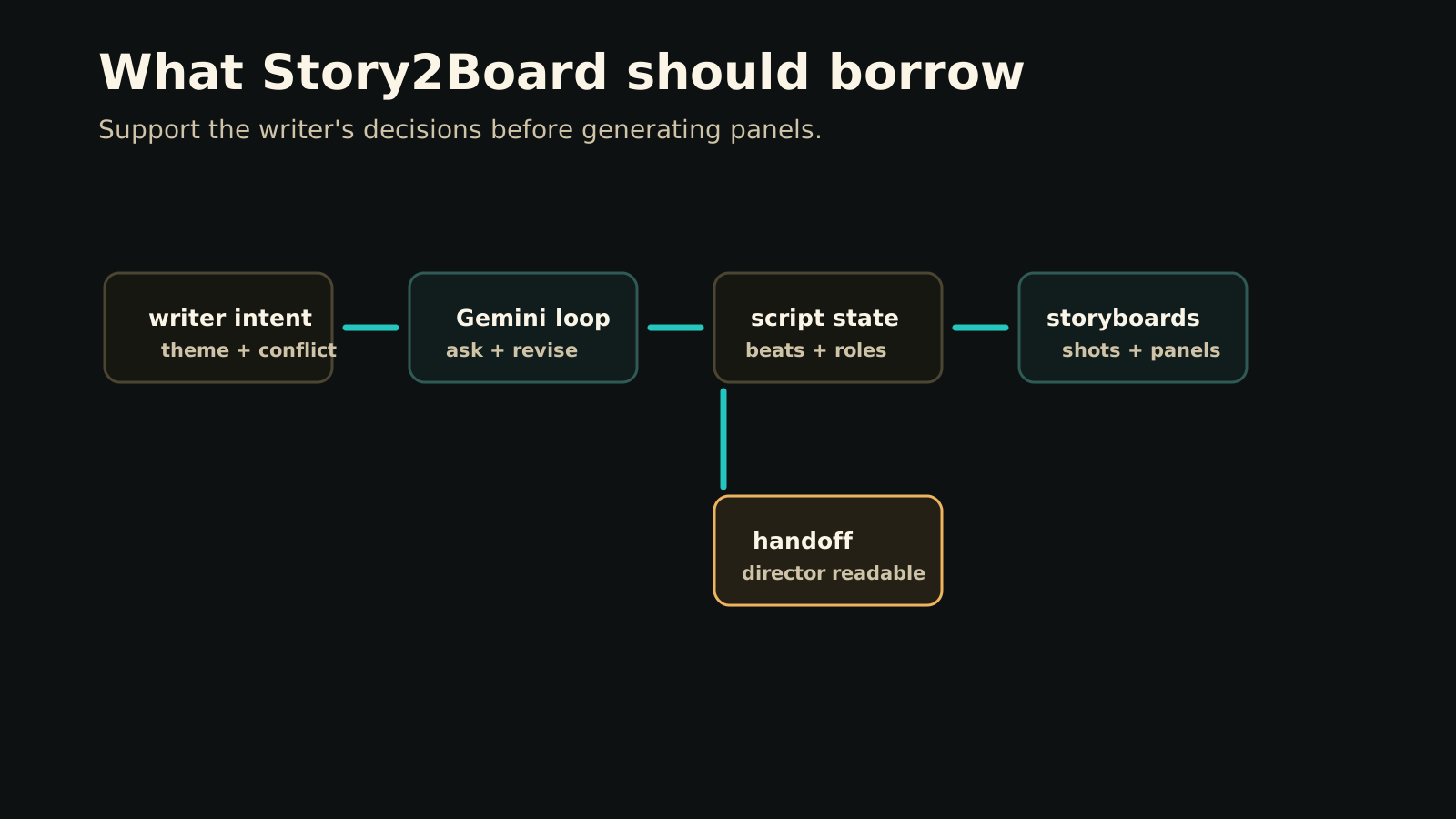
A Story2Board workflow inspired by this paper would keep five layers separate:
| Layer | What it stores |
|---|---|
| Writer intent | theme, genre, tone, audience, story promise |
| Narrative structure | conflict, midpoint, reversal, climax, resolution |
| Character state | goal, motivation, relationship, emotional change |
| Visual planning state | locations, props, camera logic, scene transitions |
| Storyboard output | panels, shot notes, revision history, production handoff |
That separation prevents a common AI-product failure: treating the generated artifact as the source of truth. The source of truth should be the structured creative state, not the latest draft.
This connects directly to our GEST-Engine article. GEST makes event state explicit before video execution. A screenwriting tool should do the same at the writing layer before storyboard rendering.
It also connects to CANVAS, where visual continuity depends on explicit story state, and to our Story2Board consistency article, where pixel-level consistency is only the final layer.
What the paper does not yet prove
Because this is a progress paper, we should read it carefully.
It does not yet provide final interview findings. The planned data collection and thematic analysis are described as future work. It does not yet prove which AI features screenwriters prefer, which workflow changes are most damaging, or which interventions improve script quality.
It also focuses on commercial genre and micro-short drama writing. That makes the research more comparable, but it means the conclusions may not transfer cleanly to art cinema, documentaries, theatre, musicals, or experimental narrative forms.
The prototype also reflects a highly structured approach. That is appropriate for micro-short drama, where genre formulas and audience hooks are central. But a serious writing tool needs different levels of structure for different writers.
So the useful reading is not "this paper solved AI screenwriting." It is "this paper asks the right workflow questions."
The product lesson
AI screenwriting support should not begin with a blank prompt box that says, "write me a script."
It should begin with the writer's process:
| Product question | Why it matters |
|---|---|
| What kind of story is this? | sets genre expectations |
| What is the conflict? | anchors scene purpose |
| Who changes? | guides character continuity |
| Which beat needs visual planning? | connects script to storyboard |
| What should AI suggest, and what should remain the writer's decision? | protects authorship |
The paper's best contribution is its shift from output to workflow. That is where Story2Board should stay focused. The goal is not to replace the screenwriter with a text generator. The goal is to help the writer move from an idea to a structured, revisable, visually ready script.
That is the bridge from AI co-writing to AI storyboarding.
References
Qian, Y. (2026). Toward Better Support for Screenwriters: Understanding How AI Co-Creation Transforms the Creative Process of Screenwriting. In Creativity and Cognition (C&C '26), 70-73. ACM. https://doi.org/10.1145/3803784.3804476